Most Durable Men’s Leather Belt: Full-Grain Buying Guide
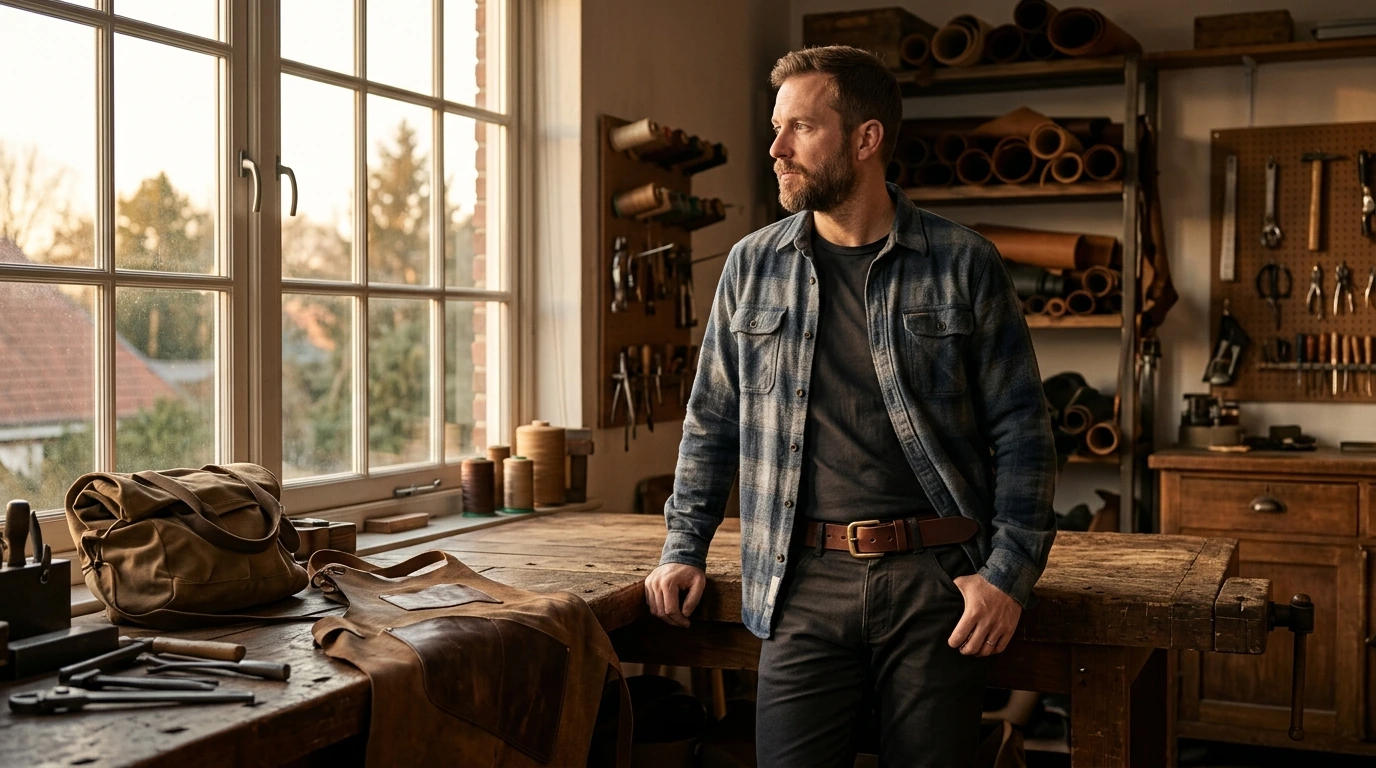
What is the most durable leather belt for men?
The most durable leather belt for men is typically made from full-grain leather—especially a single, thick piece of full-grain cowhide—with reinforced stitching and solid hardware. Full-grain leather keeps the hide’s strongest fibers intact, so it resists cracking, stretching, and premature wear far better than “genuine leather” or heavily corrected leathers.
For maximum longevity, look for a belt that’s about 1.25″ to 1.5″ wide for everyday use, with a substantial thickness (often around 10–12 oz leather or roughly 4–5 mm). A well-built full-grain belt should start a little stiff, then soften and mold to your waist without losing structure.
What to look for in a truly long-lasting men’s leather belt
1) Full-grain leather (not bonded or “genuine”)
Full-grain is the top choice for durability because it ages by developing a patina rather than peeling or flaking. Avoid belts described as bonded leather or “PU leather” if durability is the priority.
2) Solid buckle and quality attachment
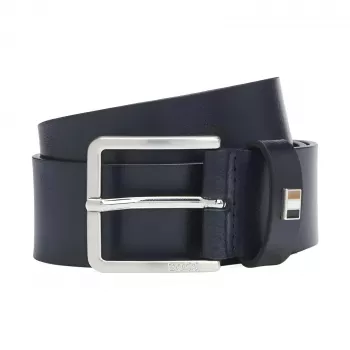
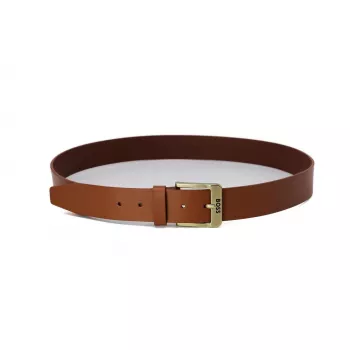
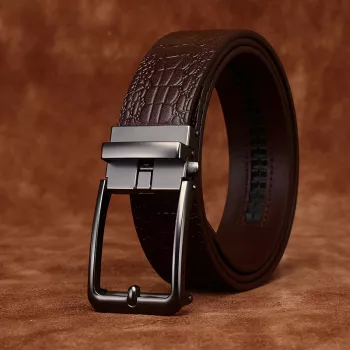
A sturdy buckle (solid brass, stainless steel, or zinc alloy with a solid feel) matters as much as the strap. Also check how the buckle is secured—tight stitching and clean finishing reduce weak points.
3) Clean edges and consistent finishing
Burnished or sealed edges help prevent fraying and moisture intrusion. Even, dense stitching and a smooth underside reduce early cracking.
Dress durability vs. everyday durability
If the belt needs to work with both jeans and dress pants, choose a full-grain belt with a refined finish, moderate width, and a classic buckle profile. For deeper guidance on selecting an everyday-to-dress option, see the main guide here: men’s leather belt for everyday and dress wear.
For Most Durable Men’s Leather Belt: Full-Grain Buying Guide, the best answer depends on fit, material, care instructions, and how the product will be used day to day.
FAQ
How do you maintain a leather belt so it lasts longer?
Wipe it down occasionally, condition it lightly a few times a year, and avoid soaking it. Hang it or lay it flat to prevent permanent curling.










Leave a comment